
Why my new book Magnolia Graffiti is a work of innocence art
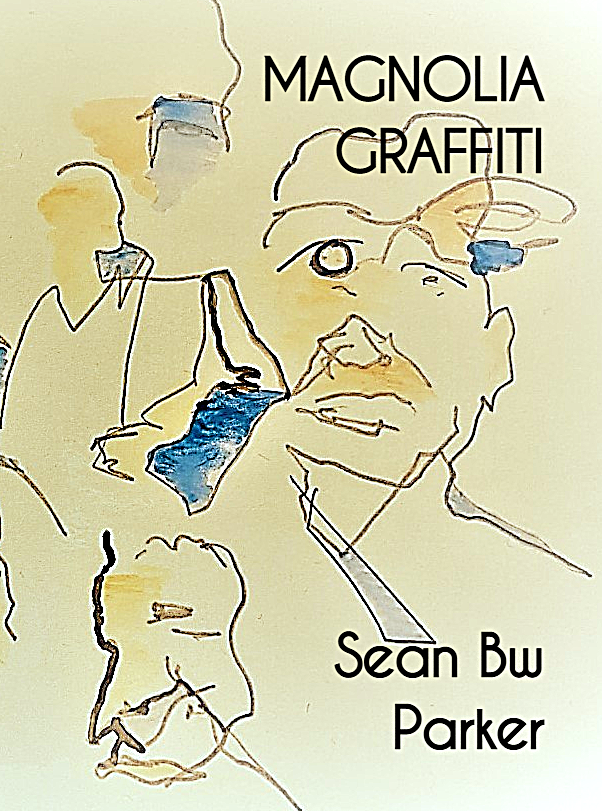
Magnolia Graffiti is my twelfth book, but the first which deals directly with my own experience of being wrongfully convicted. Panopticon, my first anthology of poems, and published in 2025, concerned similar topics but in a lyrical rather than descriptively narrative form; and many of my paintings since conviction have referenced the whole system. All these expressions could be defined as Innocence Art.
In 2018, at the height of the #MeToo movement, I was convicted and sentenced to eight and a half years in prison as a result of allegations made at an arts and music venue I had founded and was running on the Sussex coast. The police attempted to concoct a ‘spiking’ narrative in the absence of any evidence whatsoever, and so were at least not allowed to use their (entirely fabricated) suspicions in court.
The police lawyers implied it anyway, ignoring the fact that my complainant had willingly drunk all her own drinks, refused to be taken home by other customers/friends a number of times, and walked unaided up three flights of stairs to my room at the top of the venue. The prosecution barrister repeatedly asserted that my friend/complainant had simply ‘submitted to sex’ (as if that somehow constitutes ‘rape’. Nowhere is this in the description of the crime). As far as ‘victim impact’ goes, my complainant went on to run for Liberal Democrat councillor a couple of months after the event.
But the book doesn’t focus on the complainant(s), it’s about a system that now encourages wrongful convictions. The fact that I didn’t speak at my own trial due to nerves over my stammer being misinterpreted, and loss of confidence after finding out my main witness had been ‘turned’ over the fourteen month wait on bail, all contributed to the cumulative stress. I could feel the courtcraft being enacted all around me, a stitch-up, and felt powerless to do anything about it.
So Magnolia Graffiti started to take shape at HMP Winchester in the spring of 2018. One of my first cells was painted dark grey, but other inmates had scratched various messages into the wall, exposing the magnolia paint beneath. After two months at ‘Winch’, the prison meat wagon took five other men and I down to HMP Dartmoor, one of the UK’s oldest and most notorious prisons, and definitively its most altitudinous and remote.
While prison is a negative, hostile and suspicious place at the best of times - inmates and staff, that is - I did manage to become art and content editor of the Tor Times prison magazine, with a managing editor who also happened to be maintaining innocence. Our work on this, while we were not isolating due to Covid, kept what remained of our sanity intact, and as we did what we could to keep contact with the relative normality of the outside world.
This fellow prisoner - and a number of others - are all referenced in Magnolia Graffiti, being as it is an explanation of my own case, the prison experience in general, and the various structures in place to keep approximately 15,000 Prisoners Maintaining Innocence in prison at any one time.
When I was released from Leyhill ‘open’ prison in 2022, halfway through my sentence as is standard (and the best motivator towards good behaviour for those that need it), I was able to return to some degree of real public-facing artistic productivity, without being limited to whatever I could beg, borrow or steal (ok not steal) while inside. My probation officer recommended an art club for people in my position, which met every Tuesday, and was truly valuable as a stepping stone between the oddness of being inside and trying to navigate the outside world - with the cloud over one’s head that most released prisoners will recognise.
I had started Magnolia... pretty much at the start of my sentence, mostly as handwritten notes, with some printouts I was able to organise from the desktop publishing department where we prepared Tor Times. I transcribed all these from my studio flat with a zeal to tell the story the court hadn’t enabled me to tell, and the book was finally in publishable form by the end of my time on probation, in 2026.
In the meantime. I’d met Dr Michael Naughton of Empowering the Innocent (ETI) and the University of Bristol, dubbed by some ‘Dr Miscarriages of Justice’. I’d tried to write to him from prison, but my letters didn’t seem to have got through the entirely arbitrary post room. Along with Tor Times and writing Magnolia Graffiti, Naughton and Tan’s book, Claims of Innocence: An introduction to wrongful convictions and how they might be challenged, sent to me by Margaret Gardener of FASO (the Falsely Accused Support Organisation), is also credited with saving some sanity.
Michael asked if I’d like to be editor of False Allegations Watch, a strand of ETI, and we soon discussed the idea of Innocence Art, an idea he had conceptualised some years before. When he saw a postcard-sized portrait I had painted of him for the Koestler Arts organisation, he realised I was already somehow doing Innocence Art in all but name.
It’s not only guilty prisoners who need ‘rehabilitation’, those maintaining innocence need it too: rehabilitation from the pressure of bail and trial, from the injustice of being unfairly represented and judged, and from the ongoing scrutiny of the state’s most onerous sanction: in prison and probation. For me, that rehabilitation was the same as my means of surviving inside - understanding that creativity is my core, the place I go to for both protection and expression.
I gave a TED talk about my stammer in 2013 in Istanbul when I was living there, and in 2023 followed that up with a book, Compelling Speech - The Stammering Enigma, in which I could only allude to my trial, due to (deeply problematic) probation conditions. This stammer, which rendered me near-mute for the first six months or so of my sentence, became much easier to handle as my sentence in the community went on, to the point where I was able to give a speech at Falsely Accused Day 2026, a few days after the release of Magnolia Graffiti.
Claims of Innocence, the paintings I have made since 2018, the editing and writing I’ve done for False Allegations Watch, Panopticon, and Magnolia Graffiti are all testament to the rehabilitative power of Innocence Art, and I’ll be forever grateful for all of them. Magnolia Graffiti is a statement on my case, a defence of sorts, and a critique. It’s also a kind of spiritual-intellectual medicine.
By Sean Bw Parker
Magnolia Graffiti is available as Paperback or Ebook here: Magnolia Graffiti: Amazon.co.uk: Sean Bw Parker Books


Comments